|

UFOs came to save us from Fukushima disaster
I posted this multiple times on my Facebook page (Mary Joyce) and every time it was immediately taken down. I do not know why, especially since it brings us hope. - The editor
HELL ARRIVED IN JAPAN on March 11, 2011. It was hit by the Fukushima Daiichi Nuclear Power Plant meltdown, a 9-point earthquake and a devastating tsunami. MIRACULOUSLY, the Enmyoin Buddhist Temple in the Fukushima Prefecture remained standing as everything around it was destroyed.
THE TEMPLE’S HIGH PRIEST, Tomonori Izumi, survived that hellish day and observed multiple UFOs over the nuclear plant immediately after three of its reactors exploded. He made this statement about what he saw and felt that day:
“The UFOs appeared after the explosion. There were so many of them. I was shocked. Radiation was leaking everywhere. . . I believe the UFOs came to regulate the flow of radiation to save us. At least that’s my theory. I don’t know if it was some kind of god or some powerful being in the UFO, but I believe that some invisible force really came to save us.”
Click on the following link to watch the brief video. The quality is poor but it’s remarkable that someone managed to take it. www.youtube.com/watch?v=Mp7mAdFkI_0&t=13s |
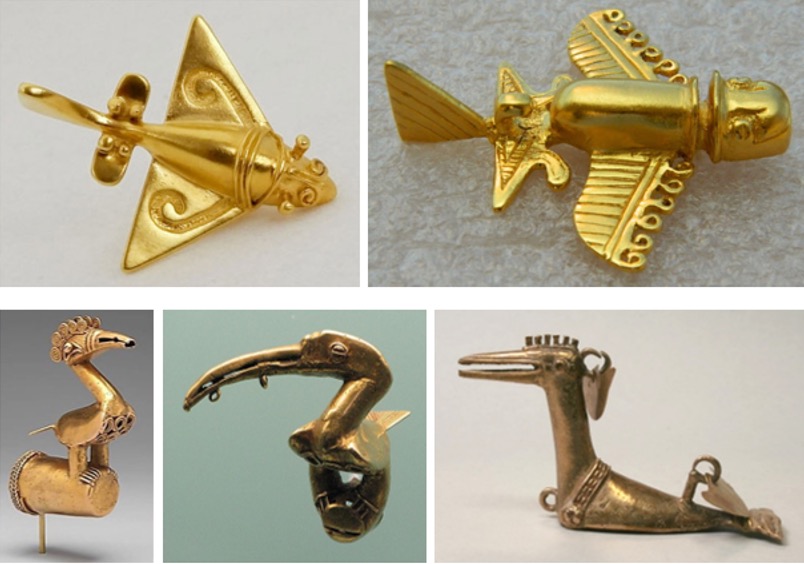
Metalworkers depicted airplanes many centuries ago
By Mary Joyce, website editor
These are some of many ancient winged objects on display at the Gold Museum in Bogota, Columbia, South America. Historians generally believe they were created between 500 BC and 600 AD by the Quimbaya people who once lived in Colombia.
Mainstream archaeologists typically declare that Quimbaya objects in the top row represent birds because they have wings and were created centuries before the Wright brothers made their first flight. But, these “birds” have vertical stabilizers and stiff wings just like airplanes.
The bird explanation for all Quimbaya winged objects is destroyed by the ancient metalworkers themselves. They created the birds in the second row without stiff geometric wings and vertical stabilizers. It appears that they knew the difference between feathered birds and airplanes. |

This might surprise some Christians
By Mary Joyce, website editor
Many early Christians wrote about Jesus. Even in a cursory search, I found 51 gospels beyond the four in Christians Bibles. Since Jesus impacted so many lives, how can anyone be comfortable believing that everything there is to know about Jesus is only written in the Gospels of Matthew, Mark, Luke and John or even in the New Testament?
Actually, a great deal of information was circulating about Jesus and his teachings during the first centuries after his Crucifixion. Then in 325 AD Emperor Constantine the Great invited 1000 bishops of the Eastern Churches and 800 from the Western Churches to gather together to decide upon a common creed. According to Coptic Christian writings only “318 Holy Fathers” actually attended. It was those men who determined which early writings would be included in an official Bible. But it wasn’t until 367 AD that Father Athanasius provided the final book count that we have today.
Gospels attributed to individuals: |
Gospel of Andrew
Gospel of Apelles
Gospel of Barnabas
Gospel of Bartholomew
Gospel of Basilides
Gospel of Cerinthus
Gospel of Eve
Gospel of Hesychius
Gospel of Jesus’ Wife
Gospel of Judas
Gospel of Lucius
Gospel of Mani
Gospel of Marcion
Gospel of Mary
Gospels attributed to groups:
Gnostic Gospels
Gospel of the Ebionites
Gospel of the Hebrews
Gospel of the Nazarenes
Gospel of the Twelve
Coptic Gospel of the Twelve
Dead Sea Scrolls
Greek Gospel of the Egyptians
Memoirs of the Apostles
Synoptic Gospels
|
Gospel of Mary Magdalene
Gospel of Matthias
Gospel of Merintus
Gospel of Nicodemus
Gospel of Peter
Gospel of Philip
Gospel of the Saviour
Gospel of Valentinus
Acts of Andrew
Acts of Paul
Acts of Peter
Acts of Thomas
Apocryphon of James
Protoevangelium of James
Secret Gospel of Mark
Gospels with subject titles:
Gospel of Harmony
Gospel of the Nativity of Mary
Gospel of Perfection
Gospel of Truth
Gospel of the Four Heavenly Realms
History of Joseph the Carpenter
Arabic Infancy Gospel
Armenian Infancy Gospel
Infancy Gospel of James
Infancy Gospel of Thomas
Latin Infancy Gospel
Syriac Infancy Gospel |
|
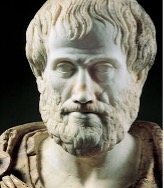 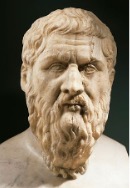 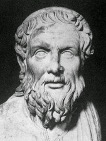 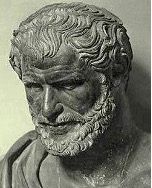
Aristotle, Plutarch, Apollonius of Rhodes, Democritus
Earth didn’t always have a Moon
By Mary Joyce, website editor
Only highly-revered ancient Greeks were preserved in stone by talented sculptors. So, we should consider that they were truthful when they wrote and taught about a time “before there was a moon in the sky.”
They also referred to the ancient Arcadians, an indigenous Greek tribe, as “Proselenes” which means “the pre-lunar people” or those older than the Moon.

Chibchas or Muisca tribesmen
Tribal oral histories of South Africa and South America also speak of a time when Earth had no Moon. For example, when the Chibchas or Muisca tribesmen of Bogata and Colombia speak about their history, they say “In the earliest times, when the moon was not yet in the heavens.” |

Can Super Soldiers survive by eating grass?
By Mary Joyce, website editor
Normal humans cannot digest grass, but more than nine years ago the idea of creating Super Soldiers that could survive on grass was presented to the International Committee of the Red Cross by Dr. Adam Henschke, a senior lecturer with the National Security College at the Australian National University.
At that time, Henschke talked about replacing soldiers’ stomachs so they could survive on grass like cows do. But, could that more easily be accomplished by simply giving soldiers the enzymes that break down cellulose?
The same year Henschke spoke, ABC NEWS posted an article about this on February 28, 2017 that concluded with this statement:
“It's not science-fiction; research is underway around the world.
And it brings with it a host of ethical concerns.”
A lot can happen in nine years. Maybe Super Soldiers already can survive on grass. |

China using animal DNA to create Super Soldiers
By Mary Joyce, website editor
I don’t doubt that this poster is true, but I wanted to find confirmation from credible sources. In my cursory search, I found this NBC News article written by Ken Dilanian. Here are the first two paragraphs of that December 3, 2020 article:
WASHINGTON — U.S. intelligence shows that China has conducted "human testing" on members of the People's Liberation Army in hope of developing soldiers with "biologically enhanced capabilities," the top U.S. intelligence official said Friday.
John Ratcliffe, the director of national intelligence, included the explosive claim in a long Wall Street Journal op-ed in which he made the case that China poses the pre-eminent national security threat to the U.S.
Next, I found an article in The Conversation, which is a global media outlet for articles written by academic researchers and experts. When I went back to get the date of the article, it was gone, but here is an excerpt I saved:
“If you want to conduct groundbreaking but contentious biological research, go to China. Last year, Chinese scientist He Jiankui announced he had created the world’s first gene-edited human babies, shocking the world at a time when such practice is illegal in most leading scientific nations.
“More recently, US-based researcher Juan Carlos Izpisua Belmonte revealed he had produced the world’s first human-monkey hybrid embryo in China to avoid legal issues in his adopted country.”
So this posting won’t turn into an academic research paper, I will conclude with one sentence from an August 1, 2025 article in National Defense Business and Technology Magazine. It was said by Mike Gallagher, a distinguished fellow at the Hudson Institute.
“China is trying to use advanced biotechnology: forced DNA collection, genetic surveillance, the genetic enhancement of soldiers for the People’s Liberation Army.”
|

Real hybrid animals – Human hybrids may exist too
These are three real-life examples of hybrids that humans created by interbreeding similar but different species:
● LIGER – hybrid of a lion and a tiger,
● GROLAR - hybrid of a grizzly bear and a polar bear,
● ZONKEY - hybrid of a zebra and a horse.
According to multiple UFO/ET researchers, hybrid humans also exist and were created by extraterrestrials. |
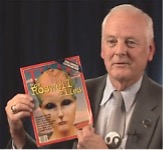
“I’m absolutely convinced from everything I’ve seen that there is a long-term program to upgrade our biological computer. Anybody who knows anything about computers, knows you have to upgrade your computer every now and then. I think we’re getting a bigger hard drive, a faster chip, and a new USB port for telepathy.” – Donald M. Ware
Don is shown with a June 23, 1997 issue of Time magazine which featured an alien-human hybrid. |
|
|
Donald M. Ware once served as director of MUFON’s Eastern Region and as director of the International UFO Congress. |
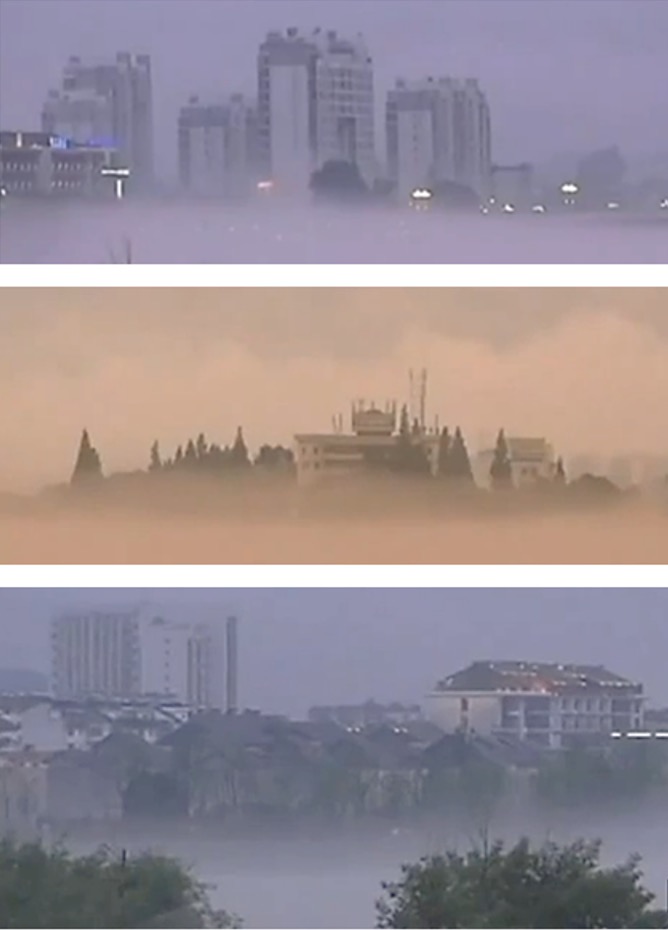
Hologram city skylines projected on heavy mist
There are increasing rumblings that governments - from the USA to China - might activate plans to manipulate and control mankind through hologram projections in the sky. This technology is nothing new. The above hologram skylines appeared over the Xinan River in Huangshan, China 15 years ago. They were projected at dusk onto a heavy mist that formed over the river after a heavy downpour. – The editor
Click here to watch a minute-long video of these holograms:
www.youtube.com/watch?v=_0M_tVsGaGM |
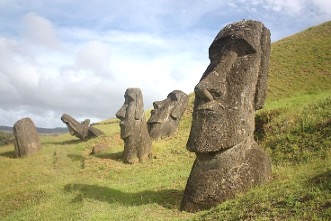
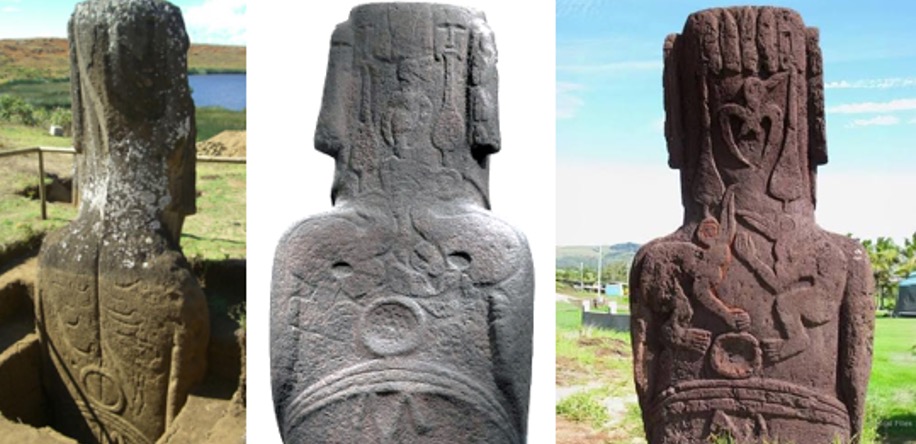
A few of Easter Island’s statues or moai
Carved images on backside of Easter Island statues
By Mary Joyce, website editor
There are about 1,000 documented statues on Easter Island. Their faces are familiar, but it’s not commonly known that images have been found on the backside of some of them.
Below are three examples. Each one is unique, but all have three things in common: three bands around the waist, a ring above the bands and a dangling design below them. Archaeologists believe these together represent a loin cloth.
Some archaeologists speculate that images were carved on the backsides of the statues because they were not meant for public display. Instead, they may have been created for sacred or spiritual communication.
|

Star-Sphinx alignment known before Bledsoe’s prediction
By Mary Joyce, website editor
There’s been lots of attention on Chris Bledsoe’s prediction that new knowledge would be revealed to humankind in 2026 when the star Regulus aligns with the Great Sphinx. |
Well, here is evidence that some within the U.S. national intelligence community might have known about the importance of this alignment long before Bledsoe received his information from a Spirit Lady in 2013.
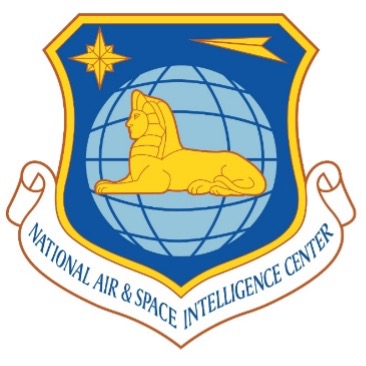
Look at the National Space Intelligence Center (NSIC) emblem on the right. It was officially approved in 1994 which is 19 years before Bledsoe received his information. |
|
|
It is significant that this emblem depicts the Great Sphinx with a large star above it. It also is significant that the NSIC is headquartered at Wright-Patterson AFB which has been the repository for ET/UFO materials and information since the Roswell crash in 1947. |

Woman caught in a diabolical Russian trap
By Mary Joyce, website editor
Nancy du Tertre, an attorney and psychic, made a special trip to Russian to learn the Russian method of psychokinesis (the ability to move physical objects using only the mind) but the training program proved to be a diabolical deception.
Her “trainers” were supposed to be Russia’s most renowned psychokinesis experts, but they imprisoned her, abused her, and subjected her to black magic and mind-control techniques. She finally escaped, but with a broken spine a mind full of haunting memories.
“I learned afterwards that the strange organization was in fact a sex cult with ties to some of the richest people in St. Petersburg. I consider myself lucky to have gotten out of Russia.” – Nancy du Tertre
To add an unexpected twist to her venture into Russia’s underbelly world, she ultimately was healed by an alien.
Nancy tells her true story in her new book, “The Cult of the Occult – Falling down the Russian Rabbit Hole.” Perhaps her title is too understated. Her RABBIT HOLE clearly proved to be a diabolical Russian RAT HOLE. |
Iran created artificial eye ages before USA existed
By Mary Joyce, website editor
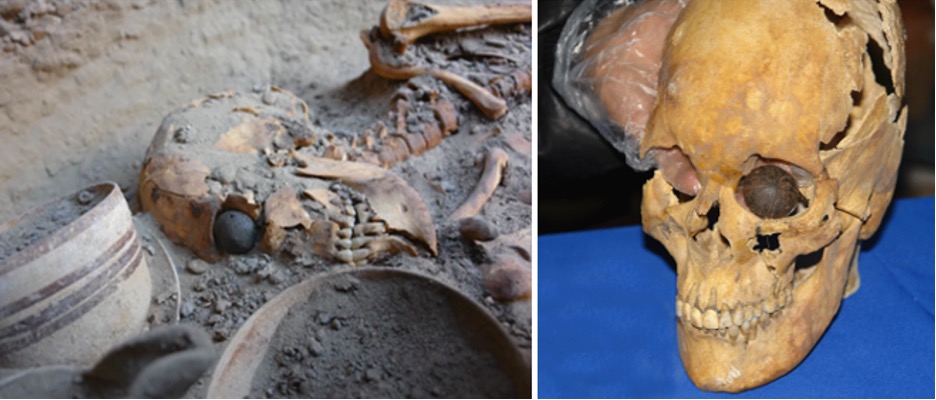
Iran has been a sophisticated society for millennia. Discovery of the world’s oldest artificial eye is proof of this.
In the ruins of the city of Shahr-e Sukhteh in southeastern Iran, archaeologists found a skeleton of a woman who was between 25 and 35 years old at the time of her death, which was nearly 5000 years ago. Based on the objects found around her skeleton, she most likely was among the elite of her time. |
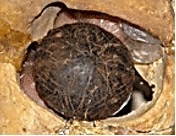
The artificial eyeball was carefully crafted from a mixture of bitumen paste, natural tar and fat. Delicate gold threads were embedded in the eye to simulate capillaries. Spots of white indicate the sclera was once white like a natural eye.
Archaeologists found evidence that the eye was so well-fitted in the socket that the woman wore it regularly and not just for public appearances or for ceremonially purposes. |
|
|
This ancient prosthetic tells us volumes about Ancient Iran’s medical knowledge and its commitment to human dignity. The very idea of creating a realistic and aesthetically pleasing prosthetic reveals a compassionate and medically aware culture. |
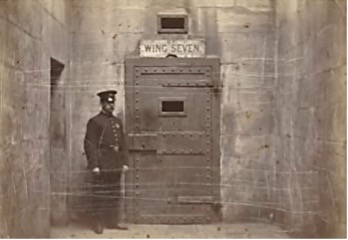 
Deathbed confession reveals Smithsonian’s cruelty to giants
By Mary Joyce, website editor
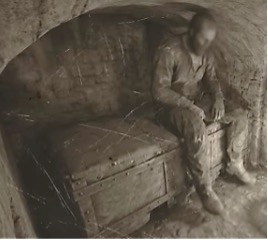
Imagine being locked in solitary confinement behind the above door for two years, not because of any wrongdoing, but simply because you were a giant.
This travesty was revealed in the deathbed confession of Jonas Blackwell, an 84-year-old former warden at Eastern State Penitentiary in Philadelphia. He exposed the Smithsonian’s cruel treatment of an innocent giant to his confessor, an Episcopalian minister. However, that 1932 confession wasn’t discovered until 2003 when the minister’s journal was found in an estate sale.
Blackwell described the prisoner as 8-feet 9-inches tall and added that "He wasn't sick. He wasn't criminal. He was evidence."
He explained that the giant was transferred to the prison by a federal marshal with paperwork signed by the Smithsonian Institution that labeled the giant as a “specimen requiring secure institutional management.”
One night the giant told Blackwell he had been found in the ground with 43 others like himself. He said they were people, not specimens. When Blackwell asked why he had been sent to a prison instead of remaining at the museum where scholars could study him properly, the answer was immediate and clear: “Because people ask questions at museums.”
So, why did the Smithsonian Institution do this? Richard J. Dewhurst, author of “The Ancient Giants Who Ruled America,” may have the answer. Here is a quote from his book:
“What my research has revealed, is that the Smithsonian has been at the center of a vast cover-up of America’s true history since the 1880s. . . After the Civil War the Smithsonian began to adopt a policy of excluding any evidence of direct foreign influence in the Americas prior to Columbus.”
The Smithsonian Institution’s cover-up is extensive, and in the case of living giants, it has been cruel. Click on the following link to learn more:
https://www.youtube.com/watch?v=jBNFvpkzbfA |
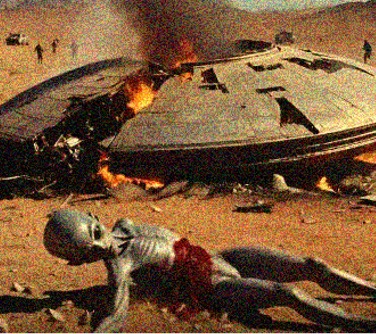
Artistic rendition of UFO crash site
First aid manual for treating injured ETs
By Mary Joyce, website editor
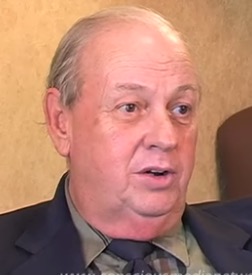
Sgt. Clifford Stone had a conventional job in the U.S. Army, but when an ET craft crashed, he was assigned to the crash retrieval team. This happened 12 times during his 22-year military career. He said ETs were uniquely different from one crash site to another. |
 |
STONE: “They had a manual which I’ve refer to as a medical manual. I wasn’t supposed to be privy to it. I wasn’t supposed to see it, but I was shown it. . . The book stated there were 57 different species that were currently visiting the Earth.
“The book was nothing more than a first aid book - how to take care of them until we can get aid from their people to do the proper medical procedures they might need. There was that coordination with their people and ours.”
(L) Sgt. Clifford Earl Stone (1949-2021) |
|
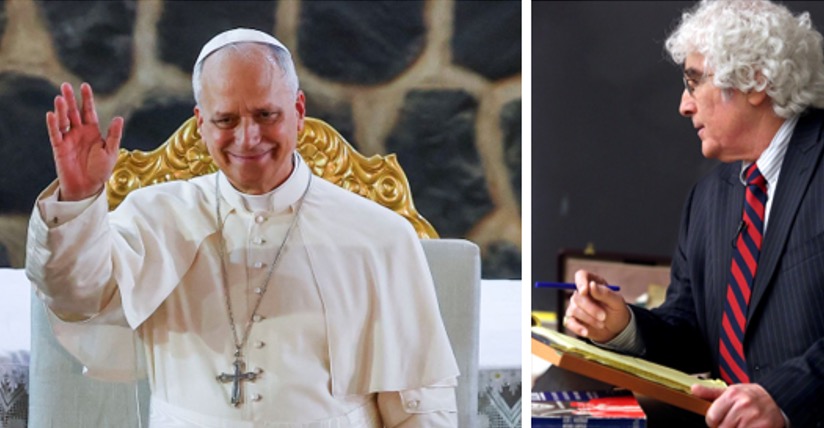
Pope Leo XIV and attorney Daniel Sheehan
“I think he is going to be the Disclosure Pope.”
By Mary Joyce, website editor
“He (Pope Leo XIV) is a person who wants to bring together science and theology to be able to bring the Catholic Church into the 21st Century so we can begin to adjust the institutions of our planet to cope with the reality that there’s an extraterrestrial nonhuman civilization that surrounds us, and the fact that they’ve been coming and going from our planet at least since the detonation of the first nuclear explosion in 1945. I think he is going to be the Disclosure Pope.”
~~~~~~~
This is a statement by Daniel Sheehan, a nationally-recognized and respected attorney with degrees from Harvard’s law school and its divinity school. He served as General Counsel to the U.S. Jesuit Headquarters for ten years, and was legal counsel for many notable cases including the Pentagon Papers, Watergate Break-in, Silkwood and Iran Contra Scandal.
He became an advocate for UFO disclosure during the Carter administration (1977-1981) when he served as special counsel for the Library of Congress’ investigation into extraterrestrial intelligence. This was an investigation President Jimmy Carter requested. It was during that investigation that Sheehan was given access to classified UFO evidence.
It might surprise some that the Catholic Church has been preparing its followers for Disclosure for well over a decade. Here is a link to an article titled “Quotes from five Catholic clergymen about ETs” that I posted in 2013.
http://www.skyshipsovercashiers.com/articles13.htm#clergy |
 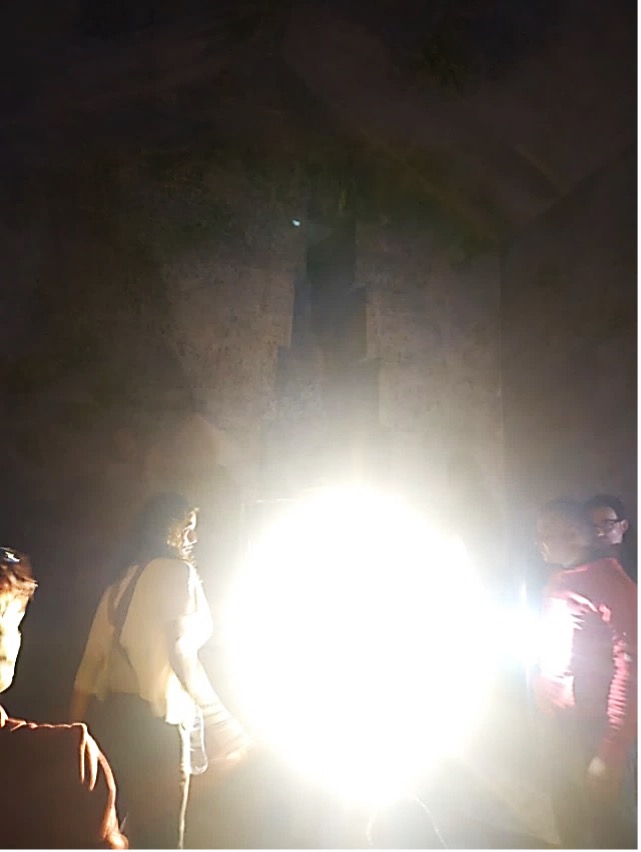
Great Pyramid phenomenon caught on camera
By Mary Joyce, website editor
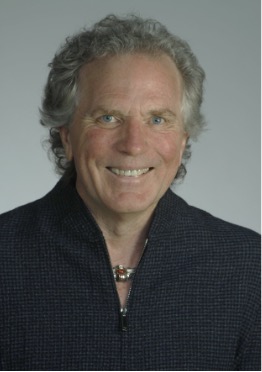
William Henry may look familiar because of his many public appearances including those on the History Channel's “Ancient Aliens” and on Gaia TV. He’s also been on “Coast to Coast AM” and written more than 20 books. He’s a life-long researcher.
On April 9, 2026, while leading a tour in Egypt, he posted the above photo of a phenomenon they witnessed in the Queen’s Chamber of the Great Pyramid. Here is the brief statement he included with the photo. The words within parentheses are his.
“I'm not quite sure what happened in the Queen's Chamber of the Great Pyramid today, but it was magnificent, and I think it has something to do with the White Lady (aka the Mother Mary). She was with me throughout our journey in Egypt over the past 12 days, so her appearance was not entirely unexpected. I'm headed home to Phoenix with a full heart and a clarified soul purpose. More soon…”
Henry’s experience may help give credibility to Chris Bledsoe’s prediction he received in 2012 from a spirit Lady in White. She told him that “new knowledge” would be revealed in April 2026 when there would be a certain star alignment with the Great Sphinx. Click here to learn more about that: http://www.skyshipsovercashiers.com/articles.htm#gsphinx |
 
Sheryl Gottschall, president of UFO Research Queensland
CE-5 gatherings are like space-age seances
EDITOR’S NOTE: CE-5 stands for “Close Encounter of the Fifth Kind,” which is a protocol Dr. Steven Greer developed to initiate peaceful contact with extraterrestrials.
Sheryl Gottschall is president of the longest running UFO research organization in Australia, UFO Research Queensland, which is celebrating its 70th anniversary this year. Below is an excerpt from her commentary in the February-March 2026 issue of UFO Encounter which is a magazine produced by the research organization.
“Séances flourished in the 19th and early 20th centuries when Spiritualism swept across Europe and North America. Participants, sat in candlelit parlors, joined hands, sat in circles, and tried to summon spirits of the dead. Mediums acted as facilitators, guiding groups through rituals designed to thin the veil between worlds.
“Today’s CE-5 sessions are less about dimly lit drawing rooms and more about open night skies and the great outdoors, but the underlying pattern is familiar: A group of people forming a circle, practicing mental focus or altered states, and seeking contact with a non-human intelligence.
“In both séances and CE-5s, ritual is key. Séance participants might dim lights, use spirit trumpets, or conduct prayers. CE-5 groups often meditate, recite protocols, and use lasers to ‘signal’ to the sky. . . The act of collective intention, whether to summon a departed loved one or an extraterrestrial envoy, may itself be psychologically powerful. . .
“In séances, skeptics were rarely welcome at the table because their doubt was said to ‘disrupt’ the energy. Similarly, CE-5 circles emphasize openness, non-fear, and ‘high-vibration’ states of mind, with the idea that a harmonious mental field invites contact.” |
 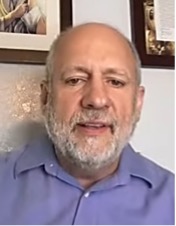
Frank Joseph – Russell E. Burrows – Brian Nettles
Are the Burrows Cave artifacts authentic?
By Mary Joyce, website editor
This is a follow-up to a previous posting titled “1st Century Crucifixion Evidence found in Illinois cave.”
Information about Burrows Cave artifacts in the previous posting is based on the research and writings of Frank Joseph who was editor-in-chief of Ancient American magazine for 14 years. He also authored 37 books. Even Zecharia Sitchin contributed to his book “Mysteries of Ancient America.” Joseph also was a well-recognized speaker at archaeological and metaphysical conferences.
But a Facebook friend inspired me to look deeper into Frank Joseph’s life. Well, I learned he was convicted of child molestation in 1979 and served three years at the Pontiac Correctional Center in Illinois. Russell E. Burrows, who found the cave and its ancient artifacts, was a prison guard during that time. So, it’s conceivable that the two might have cooked up the whole story.
Yet, as recently as 2023, Burrows declared in a video interview that artifacts from the cave are genuine but said the owner of the land had made copies of some of the artifacts in a scheme to make money.
Click on the following link to watch the interview in which Brian Nettles, who researches ancient artifacts, asks Burrows very pointed questions about his cave discoveries. Burrows at the time was 87 years old and spoke softly and a bit haltingly because of a stroke.
https://www.youtube.com/watch?v=NMj8VfDXG5w |
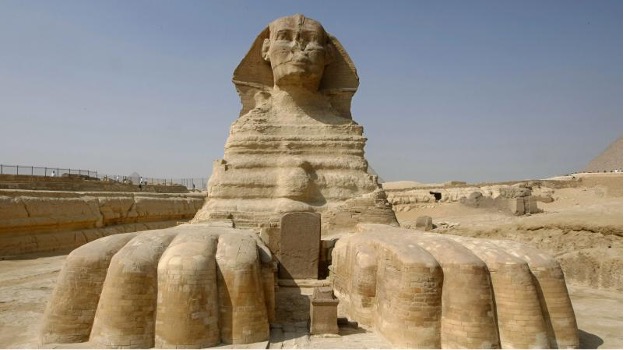
Spotlight on the Great Sphinx in April 2026
By Mary Joyce, website editor |
 |
UFOs seem to appear wherever Chris Bledsoe goes. In fact, he’s the most studied contactee in the world.
Top people in the government’s alphabet-soup agencies have followed and studied him for years. He’s also the author of “UFO of GOD.”
In 2012, a spirit lady in white physically manifested before Chris, and told him about the importance of the Great Sphinx in 2026. Here is how he explained what she said: |
|
“The Lady explained to me that in April of 2026, there would an alignment where this star, which is a blue star of Regulus, appears on the horizon in front of the Sphinx, and it would be red, and when that happens, it would mark a shift into a new knowledge, not an apocalypse. That’s what she told me. It doesn’t mean Jesus is coming back. There’s a new knowledge that’s coming. What is that? Is it under the pyramids they’ve discovered something? Is it the Hall of Records? Is it Disclosure?
“When I told this to the government about 2026, I just repeated what she told me. They immediately put remote viewers on it. Then all of a sudden, all the remote viewers are saying ‘Oh, My God, 2026, 2027 something is going to happen. We don’t know what, but something.’”
|
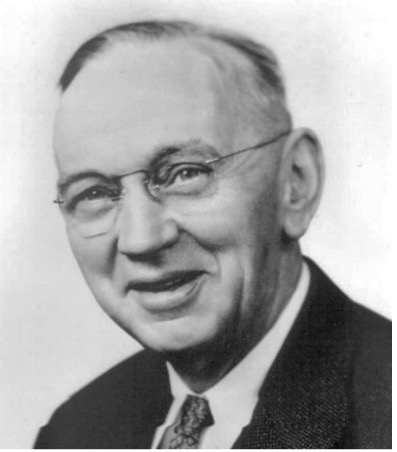
EDGAR CAYCE (1877-1945) is the most notable clairvoyant of the 20th Century who gave more than 14,000 documented trance readings on a wide range of subjects.
According to the official Edgar Cayce Association for Research and Enlightenment (A.R.E.), Cayce said in his readings that the builders of the Great Pyramid left a record of the history of mankind from the beginning under the great Sphinx. He said that the entrance to this "Hall of Records" was by the right front forepaw of the Sphinx. |
|
|
In 1982, Stanford Research Institute did acoustical soundings under the right forepaw of the Sphinx. While no indications of openings along the paw were found, there were three dead spots under the large masonry box behind the forepaw that indicate open spaces underground where the ancient records might be located. |
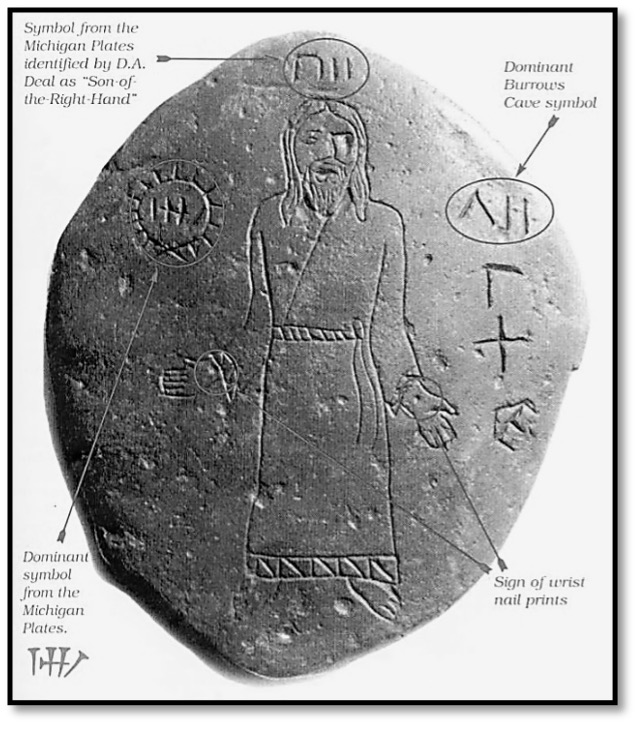 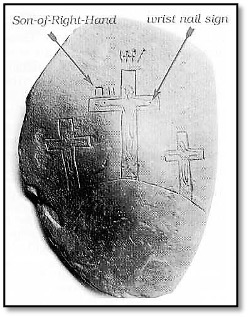
These two etched stones from Burrows Cave depict the Crucifixion of Jesus.
Enlarge to see the details and read the notations.
1st Century Crucifixion evidence found in Illinois cave
By Mary Joyce, website editor
In 1982, Russell E. Burrows, an amateur collector of 19th and early 20th Century artifacts, was searching for more bits and pieces of history in the woods of Southern Illinois when he came upon a quite ordinary cave which is now known as Burrows Cave.
Three of the etched stones he found in the cave depicted the Crucifixion of Jesus. Two are shown above. A close look at the first stone shows the nail wounds are in Jesus’ wrists not the palms of his hands. It’s important to know that many ancient cultures included the wrist as part of the hand. Also, modern medical researchers have concluded that nails through the palms would not have supported the weight of a man on a crucifixion cross. |
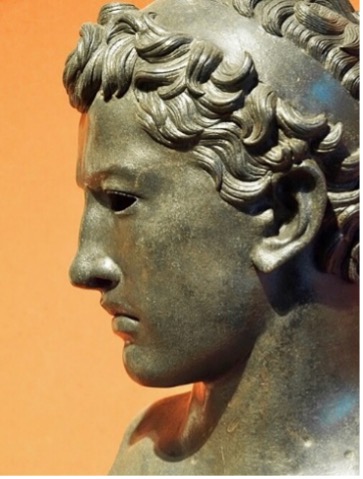
Many more priceless treasures were found in the cave from multiple ancient cultures. They were hidden there by King Juba II who fled for his life across the Atlantic with many terrorized refugees and ships stuffed with treasures. Roman Emperor Caligula, who proved to be insane, wanted to kill them all.
Before Juba became king, he was an intellectual who studied ancient Greek manuscripts at Rome’s first public library and became an assistant to the head of the library. He knew the importance of preserving the treasured objects he took with him.
(R) Bust of King Juba II |
|
|
There is more information about the discoveries in Burrows Cave in my book “Tangible evidence of Jesus left behind for us to find” which is available on Amazon. |

Iran-Israel war linked to increase in UFO sightings
By Mary Joyce, website editor
Chris Bledsoe is the most studied contactee in the world. Even national security agencies observe and study him because wherever he might be, UFOs or orbs will appear for him.
At first, he saw UFOs in the sky and ETs on his land. Years later, a beautiful lady in white appeared in the air just above him. He refers to her as “The Lady.” Below is what she conveyed to him about the significance of the Iran-Israel war. |
“When you see Iran and Israel exchanging missiles - and I saw it – and the way she (The Lady) tells me is a vision of it, like a living picture screen. I could see the rockets flying.
“Then all of a sudden, orbs appeared out of the ocean and everywhere. I told the government if this happens, the orbs are going to appear and wake the people up and stop it. That’s what she told me.
“December/November, Iran was firing rockets into Israel. Orbs appeared everywhere. The military freaked and sent out drones to muddy the water.”
Click on the link below to watch the video in which Chris spoke about this. It is less than a minute in length. www.youtube.com/shorts/l50gcWfZJt4 |
|
|
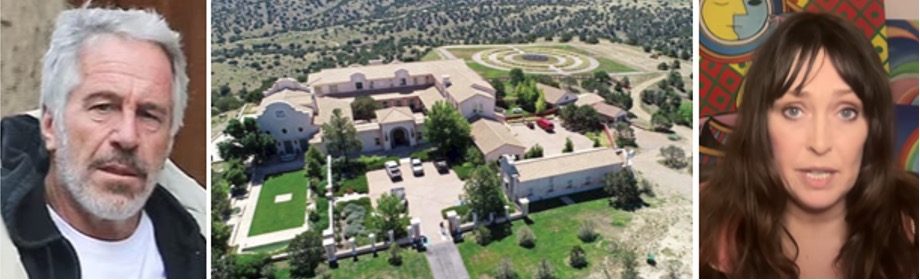
Jeffrey Epstein – Zorro Ranch in New Mexico – Juliette Bryant
Victim saw UFOs, “medical labs” at Epstein’s ranch
By Mary Joyce, website editor
Efforts to investigate Jeffrey Epstein’s Zorro Ranch in New Mexico were shut down by the Trump administration in 2019, but the criminal investigation was reopened by New Mexico’s Attorney General Raul Torrez on February 19, 2026.
Juliette Bryant was one of Epstein’s victims who was taken to his Zorro Ranch. In a video interview first posted on July 14, 2025, she revealed a great deal about her experiences while in the clutches of Epstein. The first half of her story is similar to that of other women who have been abused by him.
But in the second half, she says while under his control, she learned about UFOs, “medical labs,” shapeshifting, cloning and the vast network of perverted elites and their connections with the CIA, the Mossad and even blood cults.
It’s noteworthy that Zorro Ranch is located in New Mexico, the state known for the 1947 UFO crash near Roswell and the horror stories of the underground facility in Dulce.
Below is a link to the interview with Juliette. Her unexpected revelations begin 21 minutes into the video. https://www.youtube.com/watch?v=goWtFoX4-PA&t=2159s |
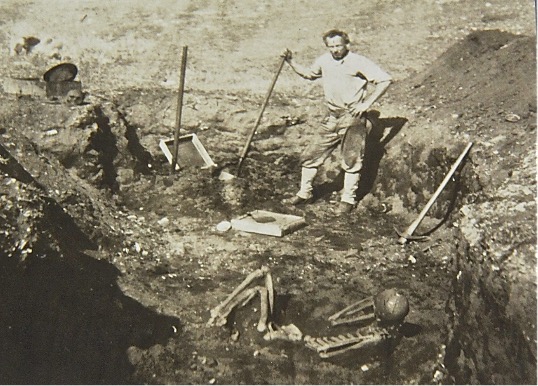
This 9-foot skeleton was found on California’s Catalina Island. It’s one of several giant
skeletons amateur archaeologist Ralph Glidden uncovered between 1919 and 1928.
Giant skeleton found near San Francisco
Below is an article about a giant skeleton that was found near San Francisco in 1912. The article was published in two newspapers on June 28, 1912 - The Long Beach Telegram and The Long Beach Daily News. No photos were included with the article. In fact, there were few photos in newspapers at that time. – The editor
BONES OF GIANT FOUND IN SOUTH
Best Preserved Skeleton of Distinct Tribe
San Francisco, June 28 – Up to about three hundred years ago a giant race of Indians inhabited the coast regions of California. Remains of these have been discovered in the islands of the Santa Barbara channel. To William Altman, assistant curator of the Golden Gate Park Memorial Museum, belongs the honor of discovering one of the tallest and best-preserved skeletons of this extinct tribe.
Altman utilized his vacation a week ago in excavating an old Indian burial mound in the nursery of Thomas S. Duan, two miles from Concord, in Contra Costa County. The giant skeleton found was ten feet from the surface, and around it were a large number of mortars and pestles, charm stones and obsidian arrowheads.
The skeleton has not yet been mounted, but the bones were assembled on a table in the curator’s office and placed on private exhibition yesterday. . . The skeleton measures seven feet four inches. The tibia is seventeen inches long.
The skull is in great contrast with that of the Digger Indian of the present day, being of a much more intellectual type. The under jaw is square and massive, being remarkable thick and strong. Either the dead Indian was of great age, or he subsisted on hard food, as shown by his molars, which are worn perfectly flat and close to the gums. . .
Click here to see the complete original article:
www.newspapers.com/article/the-long-beach-telegram-and-the-long-bea/104212110/?locale=en-US |
Major UFO event engineered says renowned psychic |
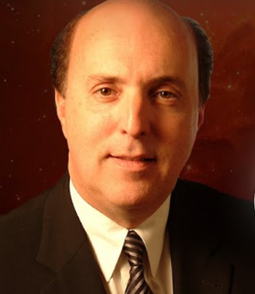 |
Sterling (L) is an internationally renowned psychic medium who has been providing spiritually received information for three decades.
He has served as a consultant for major entertainment companies including ● DreamWorks ● Amblin Entertainment ● The Walt Disney Company ● MGM ● Lucasfilm ● Pixar ● Sony Pictures ● Warner Brothers ● Amazon Studios ● Dolby ● Universal Music Group ● Marvel Studios ● NBC Universal ● Discovery ● Paramount Global ● Comcast |
|
James Fox, a UFO researcher and filmmaker, has turned public attention once again to the 1996 UFO/ET sightings in Varginha, Brazil. At that time, witnesses reported seeing a crashed, cigar-shaped object and nonhuman, brown-skinned entities with red eyes.
You can learn about Fox’s research in his film “The Program,” or watch Ross Coulthart’s interview with him at:
www.youtube.com/watch?v=5Zit-08rtkE |

|
|
Because Sterling has a proven track record for providing accurate information, I thought it would be interesting to share his input on the Varginha, Brazil events, which is at odds with Fox’s information. Here is what Sterling said on February 1, 2026:
“These were government reversed engineered craft. So, these weren’t extraterrestrial craft.
“There was also biological engineering going on with certain individuals. So, these weren’t extraterrestrials. I know some people said they were tall and had red eyes. When I kind of talked about this with my team (spiritual guides), they were saying this is all about there is some biological engineering going on there as well as reverse engineered UAP craft.”
|
 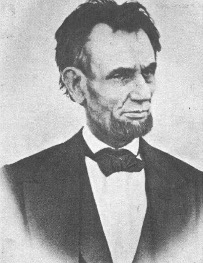
Witness to Abraham Lincoln’s assassination – Last photo taken of Lincoln
alive according to his secretaries John Hay and John Nicolay
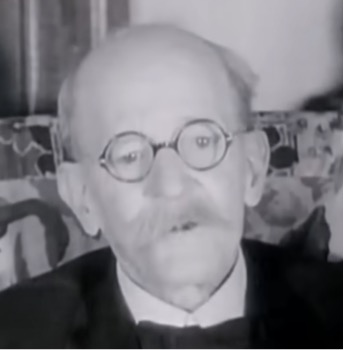
Witness to Lincoln’s assassination spoke on film in 1930
A man who witnessed Abraham Lincoln’s assassination spoke about it in a 1930 film that has been preserved by the “Life in the 1800s” YouTube channel. With Lincoln’s birthday coming up on February 12, I thought it timely to provide the link to that old film. It is only 2:39 minutes long. – The editor
Click here to see the short film:
https://www.youtube.com/watch?v=Q6IFEE_CM-I |
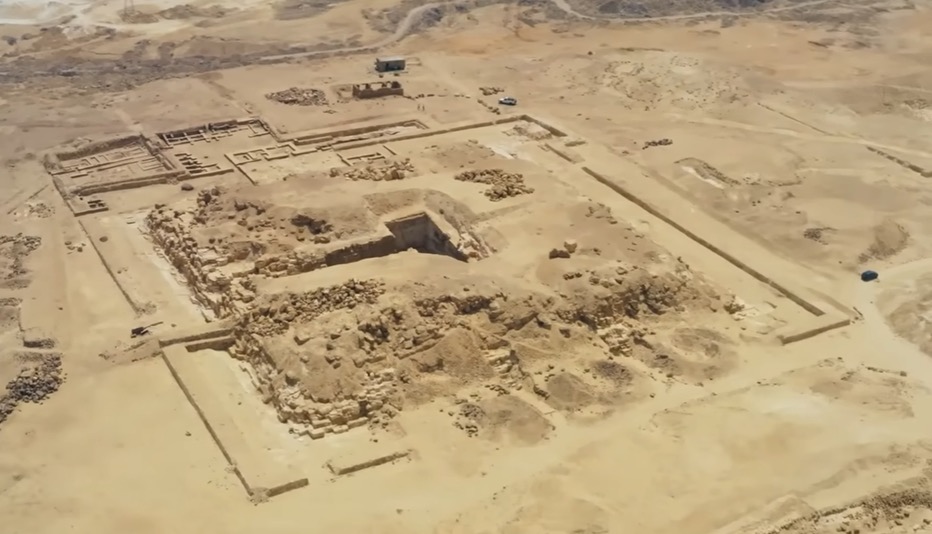
Remains of Egypt’s long-lost fourth pyramid of Giza that was built
by Pharaoh Djedefre, a son of Khufu
Lost and found pyramid once was Egypt’s grandest
By Mary Joyce, website editor
In ancient times, the fourth pyramid of Giza was dismantled for its finely cut blocks of stone and buried for millennia beneath the desert sand. Its remains were not uncovered until 1995. A power struggle between brothers within the Khufu dynasty may be the reason for its demise. |
If the fourth pyramid were still standing today, it would be the grandest of those in Giza. First, it was built high above the other three Giza pyramids and would have been seen for miles. Second, it was designed to be the most eye-catching of them all. Pharaoh Djedefre, a son of Khufu, had the lower part built with shiny red granite and the top in polished white limestone. Archaeologists believed it looked like the model on the right. |

|
|
Khufu, the second pharaoh of the 4th Dynasty of Egypt, is credited by archaeologists for the building of the Great Pyramid of Giza, which is one of the Seven Wonders of the World. His son Pharaoh Djedefre sought to build something even grander. |
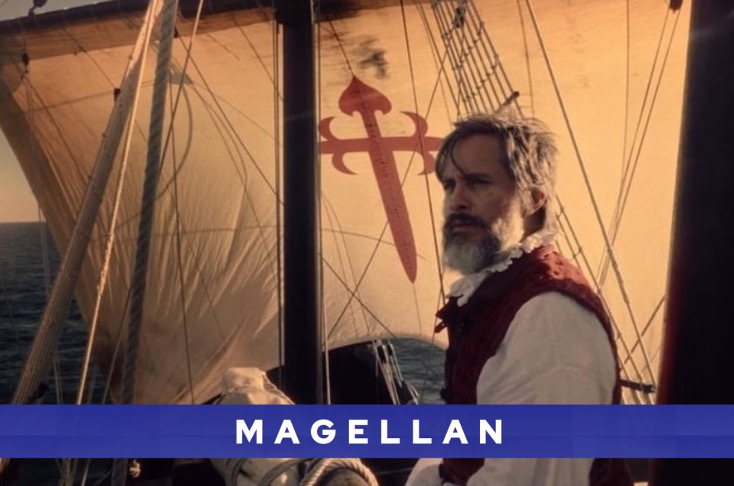
“Magellan” film doesn’t include explorer meeting giants
By Mary Joyce, website editor
The movie “Magellan”was just released in the USA on January 9, 2025. It’s had great reviews, but does not include Ferdinand Magellan’s face-to-face meeting with giants on the coast of Patagonia.
That unique episode, however, was recorded for history by Antonio Pigafetta who served as Magellan’s assistant and chronicler of the voyage. Pigafetta was a respected Venetian scholar and an explorer in his own right. Below are two pages from his chronicle of Magellan’s round-the-world voyage which lasted from 1519 to 1522.
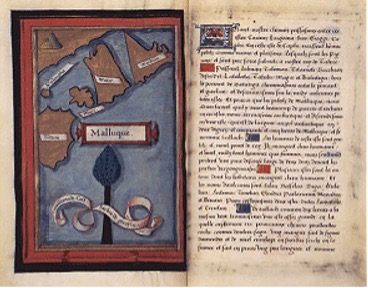
Antonio Pigafetta wrote this about the first giant they saw:
“But one day we saw a giant who was on the shore, quite naked, and who danced, leaped, and sang, and while he sang, he threw sand and dust on his head. Our captain (Magellan) sent one of his men toward him, charging him to leap and sing like the other in order to reassure him and to show him friendship. Which he did.
”Immediately, the man of the ship, dancing, led this giant to a small island where the captain awaited him. And when he was before us, he began to marvel and to be afraid, and he raised one finger upward, believing that we came from heaven. And he was so tall that the tallest of us only came up to his waist.
Explorersweb posted this additional information from Pigafetta’s chronicle:
“They named the giant Paul. ‘Paul’ allowed the foreigners to meet his people, a tribe that wore animal skins. His face was large and painted red all over except that around the eyes were yellow circles,” Pigafetta wrote of Paul. Pigafetta claimed that their reflections in mirrors scared the giants.
“Magellan wanted to exhibit this extraordinary race of people and decided to take two men back to Spain. He lured them onto his ship with shiny metallic objects. But both men died on the journey back to Europe.”
|

Lord’s Prayer translated from
Jesus’ native language is so different
The Lord’s Prayer as it is known today is based on early translations from Aramaic to Greek to Latin to English. Below is Jesus’ prayer directly translated from his native language of Aramaic to English. It is considered the best translation available. It was done by Neil Douglas-Klotz who has a PhD in religious studies. His scholarly background includes hermeneutics and Middle Eastern languages.
O Birther! Father-Mother of the Cosmos,
focus your light within us – make it useful,
create your reign of unity now.
Your one desire then acts with ours,
as in all light, so in all forms.
Grant what we need each day in bread and insight.
Loose the cords of mistakes binding us,
as we release the strands we hold of others’ guilt.
Don’t let surface things delude us,
but free us from what holds us back.
From you is born all ruling will,
the power and the life to do,
the song that beautifies all,
from age to age it renews.
Truly – the power of these statements –
may they be the ground from which all
my actions grow. Amen
|
|